
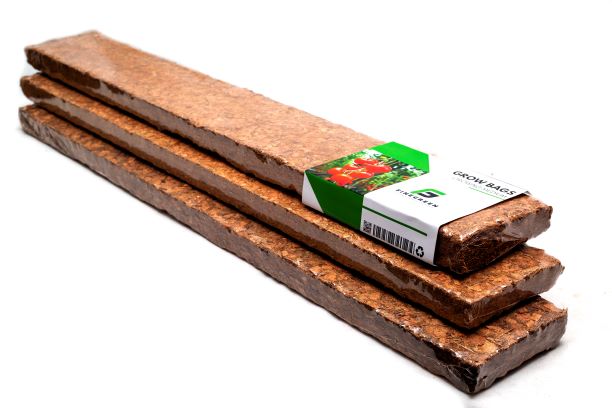
Figure 1: OXCOIR Low-EC Hydroponic Slabs in high-tech Dutch bell pepper greenhouse cultivation.
Executive Key Takeaways:
- A low Electrical Conductivity (EC <0.5 mS/cm) only measures soluble free salts, not exchangeable bound sodium and potassium ions.
- Without proper calcium buffering, unbuffered coir actively absorbs calcium and magnesium from your nutrient reservoir, causing blossom end rot in tomatoes and peppers.
- Air-Fill Porosity (AFP) between 18% and 24% is the single biggest predictor of root disease resistance during cloudy winter months.
1. The Electrical Conductivity (EC) Myth
When international purchasing managers solicit quotations for coco peat grow bags or compressed 5kg blocks, the specification sheet almost invariably begins with: "EC < 0.5 mS/cm (1:1.5 volume method)". While low electrical conductivity is vital to ensure that coconut palms grown near coastal salt breezes have had excess sodium chloride rinsed away, treating EC as the sole indicator of substrate quality is a costly mistake.
Electrical conductivity measures total dissolved ions floating in the substrate solution. However, coconut coir is a naturally active cation-exchange complex. The spongy cellular walls of the coconut pith possess negative electrostatic charges naturally saturated with Potassium (K⁺) and Sodium (Na⁺).
2. Cation Exchange Capacity (CEC) & Calcium Buffering
The fundamental science separating commercial commodity coco peat from high-performance horticultural growing media lies in Calcium Buffering. At OXCOIR's facility in the Kurunegala Industrial Zone, buffering is performed using industrial soaking pits saturated with calcium nitrate (Ca(NO₃)₂).
During this chemical displacement process, the stronger bivalent calcium ions replace the weaker monovalent potassium and sodium ions on the coir complex. The released sodium and potassium salts are then washed away with clean freshwater.
| Quality Parameter | Raw Unwashed Coir | Standard Washed Coir | OXCOIR Buffered |
|---|---|---|---|
| EC (1:1.5 extract) | > 2.5 mS/cm | < 0.6 mS/cm | < 0.8 mS/cm (Buffered) |
| Exchangeable Sodium (Na) | High (>25% CEC) | Medium (10-15%) | < 5% CEC |
| Calcium Lockout Risk | Severe | Moderate to High | Zero (Ready to Grow) |
| pH Stability | Unpredictable (5.0-7.0) | 5.5 – 6.8 | 5.8 – 6.4 (Stabilized) |
3. Air-Filled Porosity (AFP) & Husk Chip Ratio
The physical architecture of the slab is just as critical as its chemical purity. In modern high-wire hydroponic greenhouses growing vine tomatoes or English cucumbers, irrigation pulses occur up to 15–25 times per day.
If a substrate consists purely of fine peat dust (0–2mm fraction), capillary suction prevents gravity drainage, drowning root hairs and setting up prime conditions for Pythium and root rot. By blending coarse, crushed coconut husk chips (6mm–12mm) at 30% or 50% ratios, OXCOIR ensures an Air-Filled Porosity (AFP) of 20–25% even at full water container capacity.
4. Checkpoints for Global Importers
When purchasing full container loads (FCL) of coir grow bags from Sri Lanka, international buyers should insist on the following 4 pre-shipment assurances:
- Third-Party Sieve Analysis: Verify that fine dust (<1mm) constitutes less than 15% of the total dry volume.
- Batch Certificate of Analysis (COA): Complete ICP lab breakdown of sodium, potassium, calcium, magnesium, and chloride.
- UV Stabilization Warranty: Ensure the co-extruded white/black polyethylene bag is treated with minimum 3-year UV stabilizers.
- Phytosanitary Weed & Nematode Certification: Official inspection by the Sri Lanka National Plant Quarantine Service.

About Dr. Harsha Perera
Dr. Perera holds a Ph.D. in Soil Science from the University of Peradeniya and leads product formulation and analytical lab testing at OXCOIR's Kurunegala facility.